
Kemp Biography
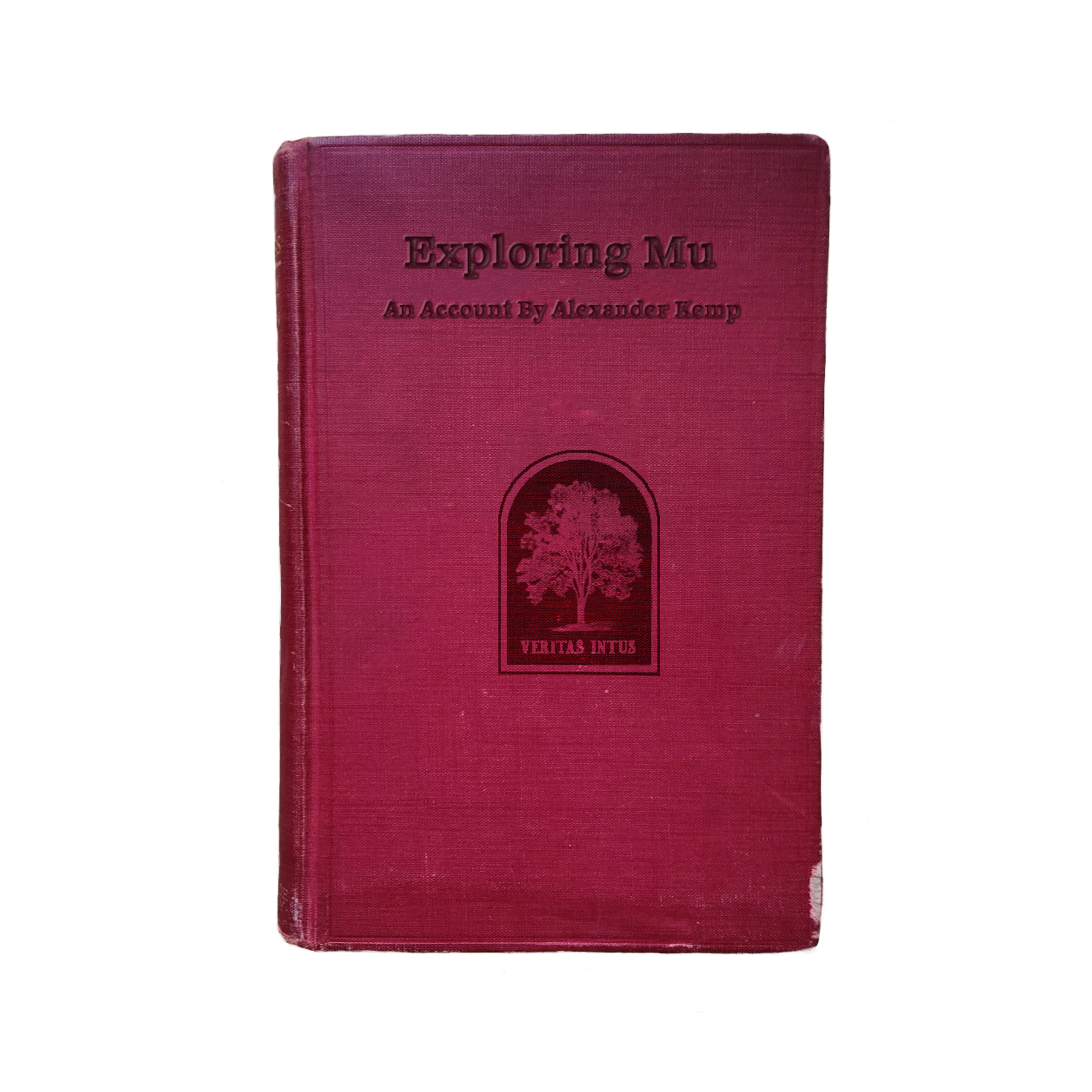
During the height of the Chester Kemp Zoological Exhibition’s popularity, Alexander Kemp wrote an account of his travels to the Skew — or the Land of Mu, as he had taken to publicly calling it. This autobiography of sorts had a very short run, with only a few hundred copies ever being published. They were sold at the exhibition in the hopes of raising additional funds for Kemp’s travels. Unfortunately, the books proved unpopular. A majority of them are believed to have been housed at the Kemp estate, where they were eventually burnt during the 1863 fire.
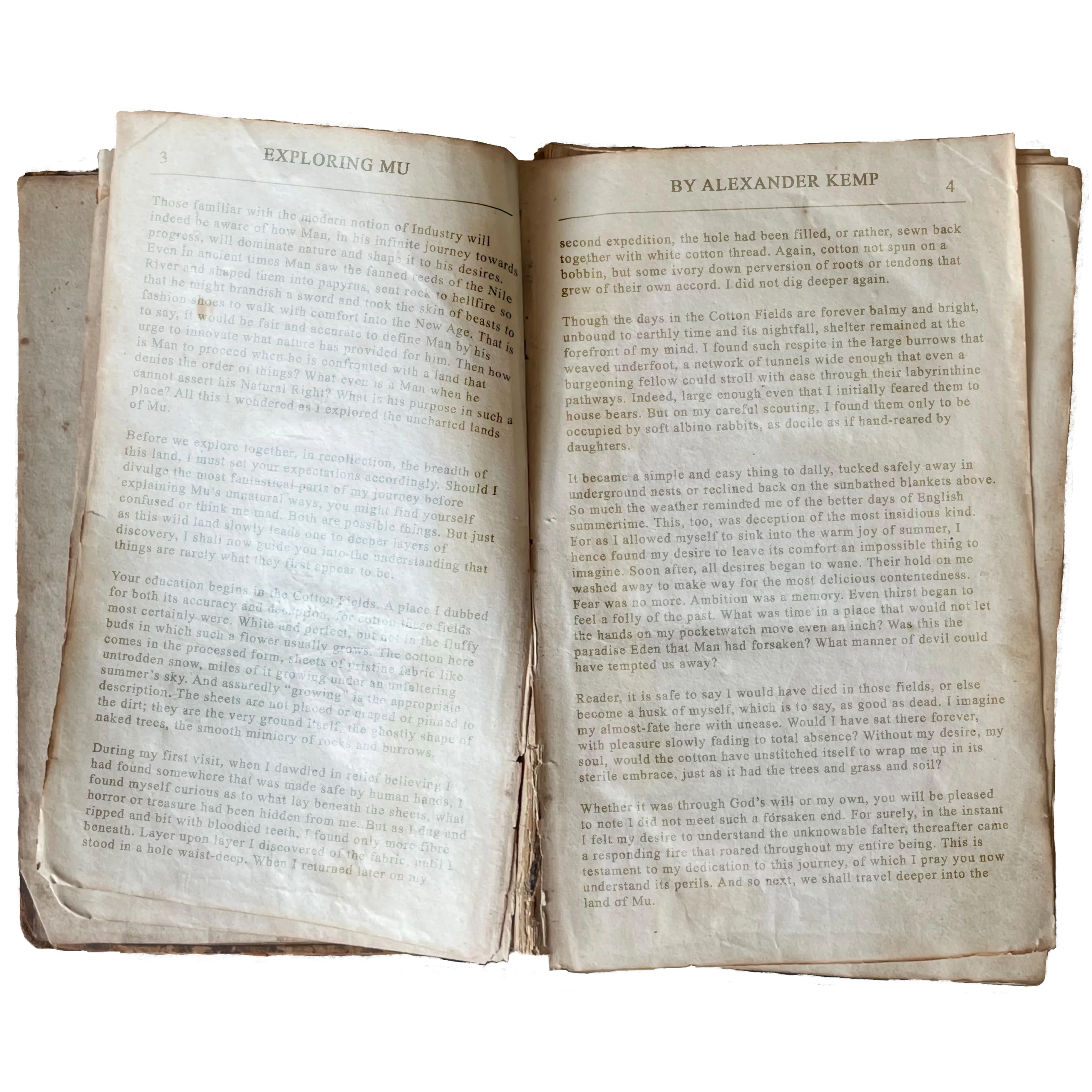
Those familiar with the modern notion of Industry will indeed be aware of how Man, in his infinite journey towards progress, will dominate nature and shape it to his desires. Even in ancient times Man saw the fanned reeds of the Nile River and shaped them into papyrus, sent rock to hellfire so that he might brandish a sword and took the skin of beasts to fashion shoes to walk with comfort into the New Age. That is to say, it would be fair and accurate to define Man by his urge to innovate what nature has provided for him. Then how is Man to proceed when he is confronted with a land that denies the order of things? What even is a Man when he cannot assert his Natural Right? What is his purpose in such a place? All this I wondered as I explored the uncharted lands of Mu.
Before we explore together, in recollection, the breadth of this land, I must set your expectations accordingly. Should I divulge the most fantastical parts of my journey before explaining Mu’s unnatural ways, you might find yourself confused or think me mad. Both are possible things. But just as this wild land slowly leads one to deeper layers of discovery, I shall now guide you into the understanding that things are rarely what they first appear to be.
Your education begins in the Cotton Fields. A place I dubbed for both its accuracy and deception, for cotton these fields most certainly were. White and perfect, but not in the fluffy buds in which such a flower usually grows. The cotton here comes in the processed form, sheets of pristine fabric like untrodden snow, miles of it growing under an unfaltering summer’s sky. And assuredly “growing” is the appropriate description. The sheets are not placed or draped or pinned to the dirt; they are the very ground itself, the ghostly shape of naked trees, the smooth mimicry of rocks and burrows.
During my first visit, when I dawdled in relief believing I had found somewhere that was made safe by human hands, I found myself curious as to what lay beneath the sheets, what horror or treasure had been hidden from me. But as I dug and ripped and bit with bloodied teeth, I found only more fibre beneath. Layer upon layer I discovered of the fabric, until I stood in a hole waist-deep. When I returned later on my second expedition, the hole had been filled, or rather, sewn back together with white cotton thread. Again, cotton not spun on a bobbin, but some ivory down perversion of roots or tendons that grew of their own accord. I did not dig deeper again.
Though the days in the Cotton Fields are forever balmy and bright, unbound to earthly time and its nightfall, shelter remained at the forefront of my mind. I found such respite in the large burrows that weaved underfoot, a network of tunnels wide enough that even a burgeoning fellow could stroll with ease through their labyrinthine pathways. Indeed, large enough even that I initially feared them to house bears. But on my careful scouting, I found them only to be occupied by soft albino rabbits, as docile as if hand-reared by daughters.
It became a simple and easy thing to dally, tucked safely away in underground nests or reclined back on the sunbathed blankets above. So much the weather reminded me of the better days of English summertime. This, too, was deception of the most insidious kind. For as I allowed myself to sink into the warm joy of summer, I hence found my desire to leave its comfort an impossible thing to imagine. Soon after, all desires began to wane. Their hold on me washed away to make way for the most delicious contentedness. Fear was no more. Ambition was a memory. Even thirst began to feel a folly of the past. What was time in a place that would not let the hands on my pocketwatch move even an inch? Was this the paradise Eden that Man had forsaken? What manner of devil could have tempted us away?
Reader, it is safe to say I would have died in those fields, or else become a husk of myself, which is to say, as good as dead. I imagine my almost-fate here with unease. Would I have sat there forever, with pleasure slowly fading to total absence? Without my desire, my soul,
would the cotton have unstitched itself to wrap me up in its sterile embrace, just as it had the trees and grass and soil?
Whether it was through God’s will or my own, you will be pleased to note I did not meet such a forsaken end. For surely, in the instant I felt my desire to understand the unknowable falter, thereafter came a responding fire that roared throughout my entire being. This is testament to my dedication to this journey, of which I pray you now understand its perils. And so next, we shall travel deeper into the land of Mu.